
 BARISTUNOBy Barista in Pajamas
Roast levels, and why they change how you grind
Light, medium and dark are not just flavour preferences. They change the physical structure of the bean, which changes the grind, which changes the shot.
Browse all articles 13
Grinders
- Conical vs flat burrs: what actually changes
- Does burr size actually matter?
- Grinder habits that quietly cost you shots
- Grind size by brew method, in microns
Beans
- Roast levels, and why they change how you grind
- Washed, natural, honey: what processing does to the cup
- How long to rest coffee, and how to store it
Espresso
Technique
Roast level is usually discussed as a taste preference: bright and acidic at one end, chocolatey and bitter at the other. That is true, but it skips the part that actually affects your morning, which is that roasting changes the bean physically, and those changes work their way straight through your grinder into the cup.
What happens inside the bean
Green coffee is dense, tough and essentially flavourless. Roasting drives off moisture, triggers the Maillard reaction between sugars and amino acids, and then caramelises sugars. Around 196 °C the bean's internal pressure cracks it audibly, which roasters call first crack. Somewhere near 224 °C the cell structure fractures again: second crack.
Between those two events, three things happen at once that matter to you:
- The bean loses mass, mostly water, and simultaneously expands. It gets substantially less dense.
- The cell walls become more brittle and more porous.
- Compounds become more soluble, so they leave the grounds into water more readily.
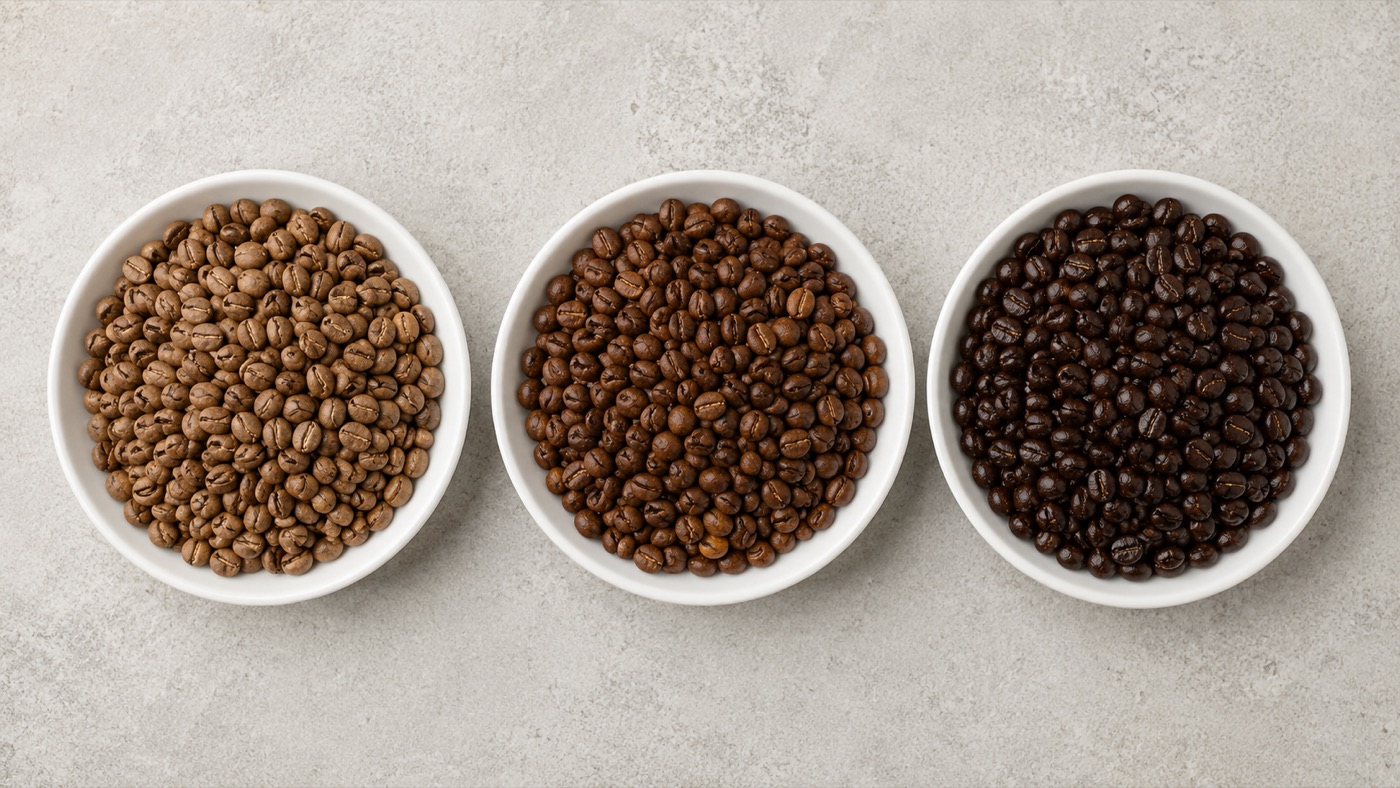
Why light roasts feel harder to grind
A light roast is denser and tougher, so your grinder has to work harder and the beans resist fracturing. On a hand grinder you can feel it. The practical result is that a light roast at a given setting produces a coarser grind than a dark roast at the same setting, because the burrs are fighting a harder material.
Combine that with lower solubility and you get the familiar advice: light roasts need to be ground finer and often brewed hotter and longer, because you are trying to extract from a material that does not want to give anything up.
Why dark roasts throw more fines
A dark roast is brittle and porous. It shatters rather than cuts. That produces a wider distribution with a bigger fines fraction, which is exactly the population that over-extracts fastest. Add high solubility on top and dark roasts become easy to push into bitterness.
So the counter-intuitive advice holds: with a dark roast you usually grind coarser than instinct says, and often brew cooler and shorter.
| Light | Medium | Dark | |
|---|---|---|---|
| Density | High | Medium | Low |
| Solubility | Low | Medium | High |
| Fines produced | Fewer | Medium | More |
| Grind direction | Finer | Baseline | Coarser |
| Water temp | 93-96 °C | 92-94 °C | 88-92 °C |
| Fails as | Sour, thin, grassy | — | Bitter, ashy, drying |
Degassing and the first week
Roasting produces carbon dioxide, which the bean releases over days. Fresh coffee full of CO2 resists water, causes espresso to bloom and channel, and tastes harsh and unsettled. Darker roasts degas faster because they are more porous.
A rough guide: espresso is usually best somewhere from about 7 to 21 days off roast, filter can be good earlier. If a bag tastes wild on day three and lovely on day ten, nothing was wrong with your technique.
One roaster's "medium" is another's "medium-dark". There is no agreed scale, and colour alone does not tell you development time inside the bean, which matters just as much. Use the roaster's own descriptors and your own notes, not the label.
Assume you need to re-dial completely. Going lighter: finer, hotter, longer. Going darker: coarser, cooler, shorter. Change the grind first and leave everything else alone until the shot time is back where you want it.