
 BARISTUNOBy Barista in Pajamas
Washed, natural, honey: what processing does to the cup
Processing is what happens to the coffee cherry between the tree and the green bean. It shapes the cup at least as much as origin does.
Browse all articles 13
Grinders
- Conical vs flat burrs: what actually changes
- Does burr size actually matter?
- Grinder habits that quietly cost you shots
- Grind size by brew method, in microns
Beans
- Roast levels, and why they change how you grind
- Washed, natural, honey: what processing does to the cup
- How long to rest coffee, and how to store it
Espresso
Technique
A coffee cherry is a fruit with two seeds inside. Processing is how the farm gets the seeds out and dry, and the method chosen changes the finished coffee dramatically. Two lots from the same trees, picked the same week and processed differently, can taste like different species.
Washed
The fruit is removed mechanically within hours of picking, the remaining sticky mucilage is fermented off in water tanks, then the beans are washed clean and dried.
Because the seed spends almost no time in contact with sugary fruit, very little fruit character transfers. What is left is the coffee itself: clean, structured, acid-forward, with the origin and varietal doing the talking. Washed coffees are what people mean by transparency, and they are the reference point for judging a terroir.
For brewing, washed lots are predictable and forgiving of small errors. They are the sensible default when dialling in a new grinder.
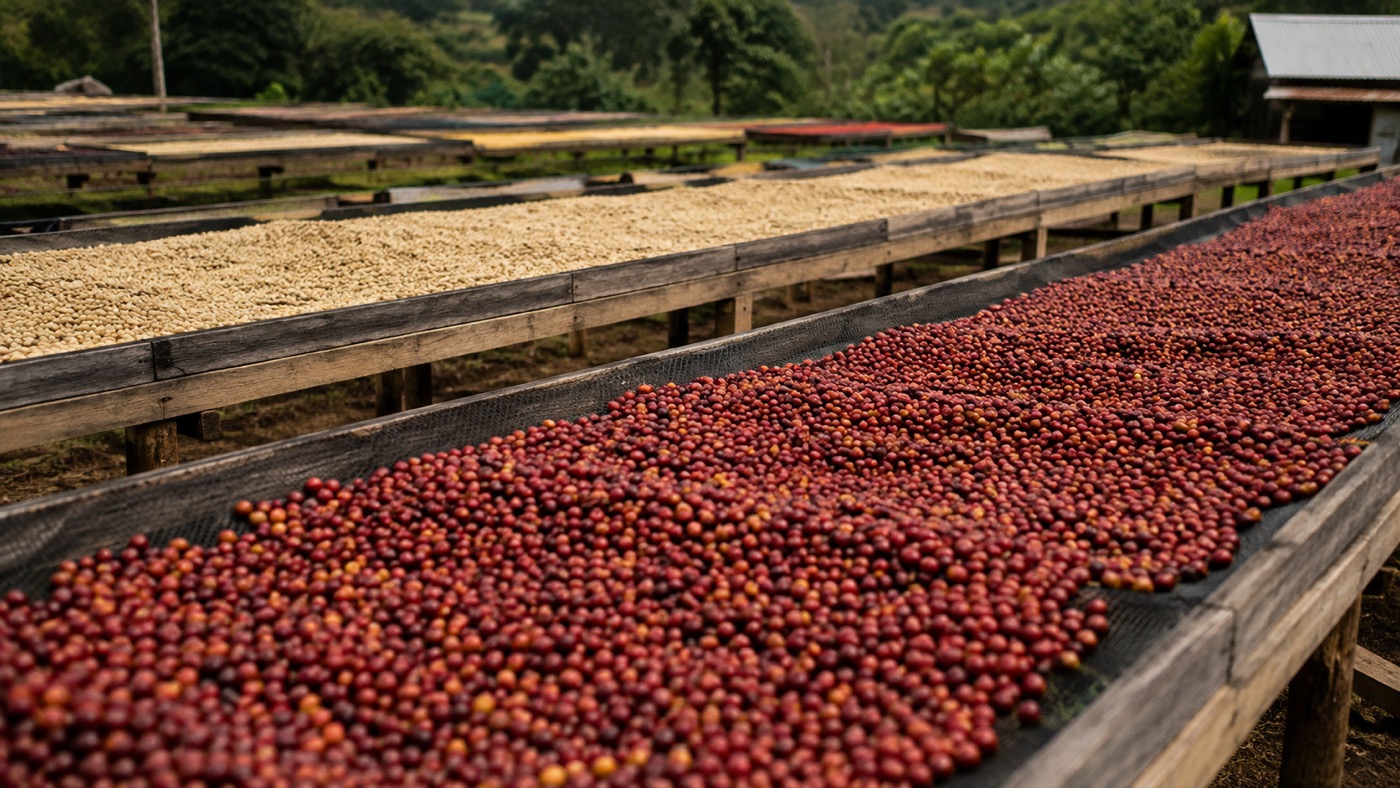
Natural (dry process)
The whole cherry is dried intact, fruit and all, often on raised beds for weeks. The seed sits inside fermenting fruit the entire time and absorbs a great deal of it.
The result is heavy, fruity, often boozy: strawberry, blueberry, rum, jam. Acidity reads lower and body reads higher. Done well it is spectacular. Done badly it tastes of compost and nail polish, because uncontrolled fermentation is a short trip to defects.
Naturals are more fragile in the cup. Their sugars are more soluble and they tip into over-extraction faster, so if a natural tastes muddled or boozy-bitter, try grinding a step coarser before anything else.
Honey / pulped natural
A middle path: the skin is removed but some or all of the mucilage is left on during drying. The names refer to how much was left and how much light the drying beds got.
| Style | Mucilage left | Cup |
|---|---|---|
| White honey | Very little | Nearly washed, slightly rounder |
| Yellow honey | Some | Balanced, sweet, mild fruit |
| Red honey | Most | Syrupy, deeper fruit, lower acidity |
| Black honey | All, slow shaded drying | Dense, jammy, closest to a natural |
Anaerobic and carbonic maceration
Cherries are sealed in tanks without oxygen, sometimes with CO2 pumped in, and fermented under controlled conditions before drying. Removing oxygen changes which microbes are active, and the resulting flavour compounds are unlike anything the other methods produce.
Expect intense and polarising: cinnamon, tropical fruit, fermented pineapple, sometimes a savoury or funky note. Some people love these; others find the process buries the coffee. They are also expensive, because tank time and control cost money.
Wet-hulled (giling basah)
Mostly Indonesian. The parchment is removed while the bean is still wet, which is unusual and produces a distinctive result: very low acidity, very heavy body, earthy, woody, sometimes herbal. It is the reason a Sumatran tastes the way it does. Green beans from this process look bluish and strange.
A poorly grown coffee given a fashionable anaerobic ferment is still a poorly grown coffee wearing a costume. Process is a lens, not a fix. The most exciting processing notes usually sit on top of already excellent fruit.
How it changes your brewing
- Washed: your baseline. Dial normally.
- Natural and anaerobic: more soluble and easier to over-extract. Start a step coarser, and be suspicious of bitterness before you blame the machine.
- Honey: behaves close to washed, slightly sweeter and more forgiving.
- Wet-hulled: low acidity means the usual sour-versus-bitter diagnosis is harder. Lean on body and finish instead.
Processing is one of the most useful things to record alongside a brew, because it explains patterns that otherwise look random. Two coffees at the same grind behaving completely differently is usually processing, not you.